Medical emergencies rarely happen when they are expected. A family member may suddenly collapse at home, a coworker could experience cardiac arrest at the office, or a fellow shopper might need immediate help at a local business. In these situations, the first few minutes are often the most important, and the actions of ordinary bystanders can have a tremendous impact on the outcome.
While many people understand the basics of CPR from videos or online resources, real emergencies require more than theoretical knowledge. Hands-on CPR certification and AED training provide practical experience that helps individuals develop confidence, improve technique, and prepare for the stress of an actual emergency. Through CPR Certification, Glendale residents can gain the skills needed to respond quickly and effectively when every second matters.
Learning CPR and how to use an Automated External Defibrillator (AED) is one of the most valuable investments a person can make in their family, workplace, and community.
Why Immediate Action Matters During Cardiac Arrest
Sudden cardiac arrest occurs when the heart unexpectedly stops pumping blood effectively.
Unlike a heart attack, which is caused by blocked blood flow to the heart muscle, cardiac arrest is an electrical problem that causes the heart to stop beating normally.
Common signs include:
- Sudden collapse
- Loss of consciousness
- No normal breathing
- No detectable pulse
Without immediate intervention, oxygen-rich blood stops circulating to the brain and vital organs.
The American Heart Association reports that immediate CPR can significantly improve survival outcomes following sudden cardiac arrest. American Heart Association
Why Hands-On Training Is Better Than Learning Online Alone
Watching instructional videos can provide useful information, but practical experience creates a much stronger foundation.
Hands-on CPR classes allow students to physically practice:
- Chest compressions
- Rescue breathing
- AED operation
- Emergency scene assessment
- Victim evaluation
Many first-time students are surprised by how much force is required to perform effective chest compressions.
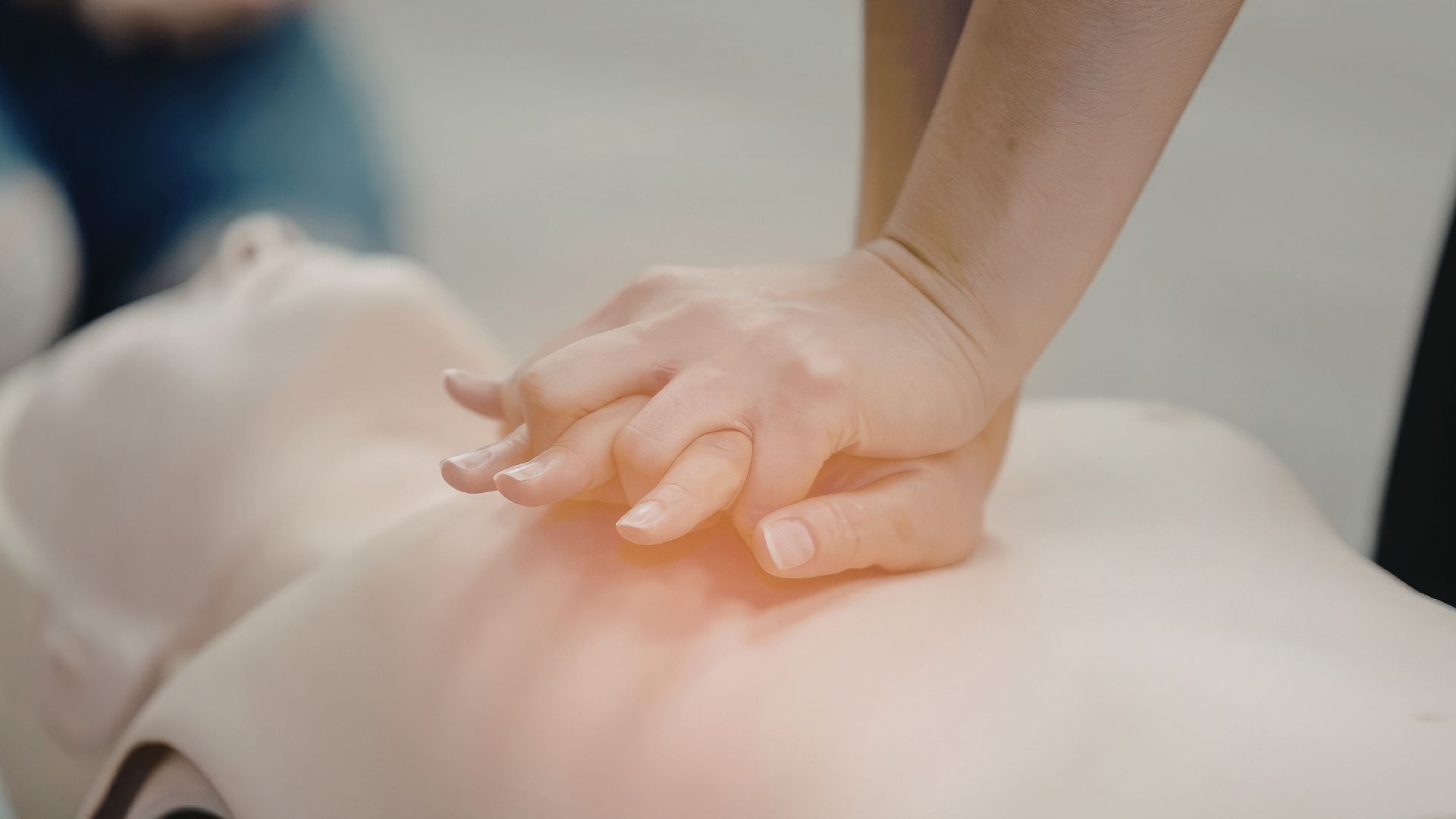
Practicing on training manikins helps participants understand exactly how CPR should feel during a real emergency.
Muscle Memory Improves Emergency Performance
Medical emergencies create stress, and stress can make it difficult to think clearly.
During high-pressure situations, people often rely on habits and repeated practice rather than trying to remember instructions they once read.
Hands-on CPR training helps develop muscle memory through repetition.
Students repeatedly practice:
- Proper hand placement
- Compression depth
- Compression rhythm
- Rescue breathing techniques
- AED procedures
This repetition helps build confidence and allows participants to react more naturally during actual emergencies.
AED Training Is a Critical Part of CPR Education
Automated External Defibrillators are becoming increasingly common throughout Glendale.
AEDs can often be found in:
- Schools
- Office buildings
- Shopping centers
- Fitness facilities
- Airports
- Community centers
- Sports complexes
These devices are designed to analyze heart rhythms and deliver life-saving shocks when appropriate.
Hands-on AED instruction teaches students how to:
- Turn on the device
- Apply electrode pads
- Follow voice prompts
- Ensure scene safety
- Resume CPR after defibrillation
Quick CPR combined with early AED use provides one of the strongest opportunities for survival during sudden cardiac arrest.
Confidence Helps People Take Action
One of the biggest reasons bystanders hesitate during emergencies is fear.
Many people worry they might:
- Hurt the victim
- Perform CPR incorrectly
- Forget the proper steps
- Make the situation worse
Hands-on training helps eliminate much of this uncertainty.
Working directly with instructors and practicing realistic scenarios gives participants greater confidence in their ability to help when someone needs immediate assistance.
Training through CPR Certification helps Glendale residents feel prepared rather than overwhelmed during emergencies.
Emergencies Can Happen Anywhere
Cardiac arrest and other medical emergencies do not only happen in hospitals.
They can occur in:
- Homes
- Restaurants
- Grocery stores
- Parks
- Schools
- Workplaces
- Sporting events
- Community gatherings
Because emergency medical services require time to arrive, bystanders often become the first responders.
The more people who know CPR, the safer the entire community becomes.
Families Benefit From CPR Training
Many cardiac emergencies happen inside the home.
Parents, spouses, grandparents, and adult children are often the first people present when a loved one experiences a medical crisis.
CPR training helps families prepare to assist:
- Parents
- Grandparents
- Children
- Spouses
- Friends
- Neighbors
Learning these skills provides peace of mind and helps families feel more prepared for unexpected situations.
Workplace Safety Improves With CPR Education
Many Glendale employers encourage or require CPR certification as part of their workplace safety programs.
Medical emergencies at work may involve:
- Sudden cardiac arrest
- Choking incidents
- Allergic reactions
- Heat-related illness
- Electrical accidents
Having CPR-trained employees helps create safer work environments and strengthens overall emergency preparedness.
Employees who complete hands-on CPR training often feel more confident assisting coworkers, customers, and visitors.
Schools and Youth Programs Need Trained Adults
Teachers, coaches, volunteers, and childcare providers play important roles in protecting children.
Medical emergencies involving young people may include:
- Choking
- Asthma attacks
- Allergic reactions
- Cardiac events
- Sports injuries
Hands-on CPR classes often include instruction for adults, children, and infants, helping participants prepare for a variety of situations.
Prepared adults help create safer schools and recreational programs throughout the Glendale community.
Hands-On Practice Helps Reduce Panic
Panic can delay emergency response.
Without training, many people may:
- Freeze
- Become overwhelmed
- Forget important steps
- Wait for someone else to act
Practical CPR classes help participants become more comfortable working through emergency scenarios.
Repeated practice builds confidence and helps students remain calmer under pressure.
The ability to stay focused can make a significant difference during a life-threatening emergency.
CPR and AED Training Work Together
CPR and AED use are designed to complement one another.
CPR helps maintain circulation while the AED analyzes the victim’s heart rhythm and determines whether a shock is needed.
Students learn how to:
- Begin CPR immediately
- Retrieve and activate the AED
- Follow the device instructions
- Continue CPR after treatment
This combination provides victims with the best opportunity for survival until advanced medical care arrives.
Practical Training Improves Long-Term Retention
Research consistently shows that active participation improves learning.
Hands-on CPR classes allow students to:
- Practice repeatedly
- Receive instructor feedback
- Correct mistakes
- Build muscle memory
- Strengthen confidence
Many participants remember physical skills much longer than information they simply read or watched online.
This improved retention can be invaluable months or even years later when an emergency occurs.
CPR Skills Extend Beyond Certification
Many people initially seek CPR certification for work requirements, but the skills often become valuable in everyday life.
CPR-trained individuals may one day help:
- Family members
- Friends
- Coworkers
- Customers
- Neighbors
- Complete strangers
The ability to step forward and provide immediate assistance is one of the greatest benefits of hands-on CPR education.
Glendale Becomes Stronger When More People Learn CPR
Every additional CPR-certified resident strengthens the community’s emergency response network.
As more people complete training:
- Families become safer.
- Schools become more prepared.
- Businesses improve workplace safety.
- Public spaces gain additional protection.
Community preparedness begins with individuals who are willing to learn life-saving skills and use them when needed.
Why Hands-On Certification Matters for Real Emergencies
Real emergencies are unpredictable, emotional, and stressful.
Hands-on CPR certification allows participants to experience realistic practice scenarios before they ever face an actual crisis.
Students gain valuable experience with:
- Chest compressions
- Rescue breathing
- AED operation
- Team communication
- Emergency assessment
This practical knowledge helps transform uncertainty into confidence and prepares individuals to act when every second counts.
Final Thoughts About Hands-On CPR Certification and AED Training in Glendale
Medical emergencies can happen anywhere and often occur without warning. During those critical first moments, immediate action by a trained bystander can significantly improve a victim’s chance of survival.
Through CPR Certification, Glendale residents can gain the practical skills, hands-on experience, and confidence needed to perform CPR, operate an AED, and respond effectively during real-world emergencies. Whether protecting a family member, coworker, student, or complete stranger, these life-saving abilities help create a safer and more prepared community.
A few hours of hands-on training can provide the knowledge and confidence to make a life-changing difference when someone needs help the most.
Frequently Asked Questions About Hands-On CPR Certification and AED Training in Glendale
Why is hands-on CPR training better than online learning?
Hands-on training allows participants to physically practice CPR techniques, receive instructor feedback, and build confidence through repetition.
What is an AED?
An Automated External Defibrillator is a portable device that analyzes heart rhythms and can deliver a life-saving shock during certain cardiac emergencies.
Does CPR certification include AED training?
Yes. Most comprehensive CPR courses include instruction on proper AED operation along with CPR techniques.
Why is muscle memory important during CPR?
Repeated practice helps individuals respond more naturally during stressful emergencies when clear thinking may be difficult.
Who should consider CPR certification?
Parents, teachers, coaches, healthcare workers, childcare providers, workplace employees, and anyone interested in helping during emergencies can benefit from CPR training.
How long does CPR certification last?
Most CPR certifications remain valid for two years before renewal is recommended or required.
Can CPR skills be used outside of work?
Absolutely. CPR training prepares individuals to help family members, friends, neighbors, or strangers during unexpected emergencies.
Why is immediate CPR so important?
CPR helps maintain blood circulation and oxygen delivery to the brain and vital organs until professional medical care arrives.